























Italian roots: the villages your family left
Between 1861 and 1985 some twenty-nine million people left Italy, one of the largest emigrations in recorded history, and almost all of it happened village by village. A street in Brooklyn from one paese in Campania, a block of Buenos Aires from one valley in Piedmont, a Brazilian farming town speaking the dialect of one corner of the Veneto. If your family is Italian-American, Italo-Argentine, Italo-Brazilian or Italian-Australian, your story does not start in Italy. It starts in a particular village, and the village is still there, holding its festa every year.
The Mezzogiorno: to America
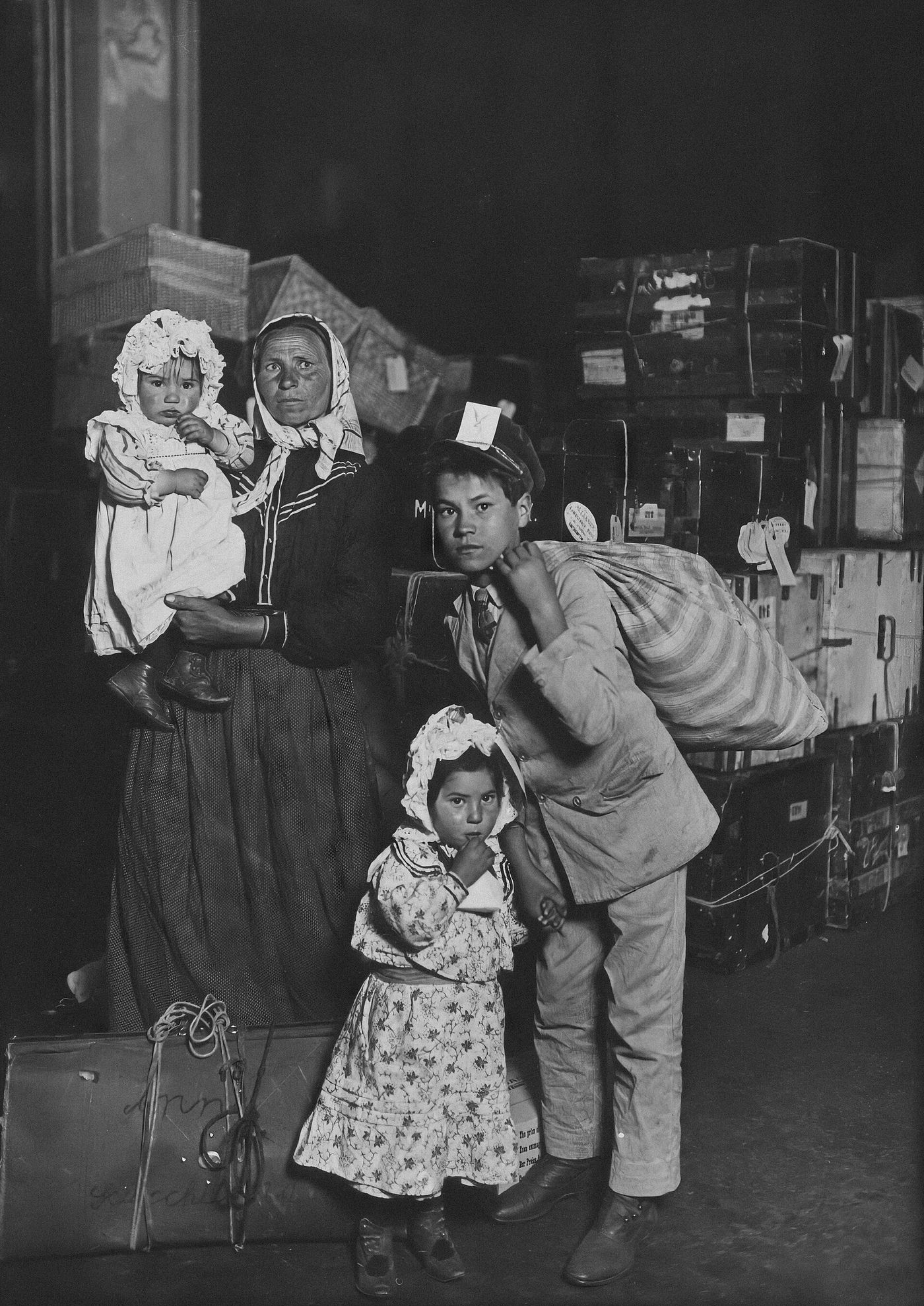
The great wave to the United States ran from about 1880 to 1924, and it came overwhelmingly from the South: Sicily, Campania, Calabria, Abruzzo, Basilicata, Puglia. It was chain migration at village scale; one man went, wrote home, and the village followed him to the same few streets. That is why the feast survived the crossing. The San Gennaro festival of Little Italy is a village patron-saint festa from Naples, transplanted whole. Around seventeen million Americans claim Italian ancestry, and for most of them the trail ends not in a city but in a hill village with a church, a piazza and an annual festa that never stopped.
Names that came this way: Russo, Esposito, Romano, Ferraro, Marino, and every surname ending in a vowel that an Ellis Island clerk left alone.
The North: to Argentina and Brazil
South America's Italians came earlier and from further north. Ligurian sailors and Piedmontese farmers built Buenos Aires to the point that as many as two in three Argentines have Italian blood, and the city's slang, lunfardo, is shot through with Genoese. Brazil took whole villages from the Veneto in the 1870s and 1880s to the coffee country of Sao Paulo and the hills of Rio Grande do Sul, where a Venetian dialect called Talian is still spoken at the dinner table a century and a half later. If your family went south, look north on the map of Italy first. Our Argentine roots guide tells the other half of that story.
The last wave: to Australia
After the Second World War the ships went the other way around the world, from Calabria, Sicily and the Veneto to Melbourne, which now has one of the largest Italian populations of any city outside Italy. The pattern held: whole villages re-formed in particular suburbs, and the village saint's day came with them. Our Australian roots guide covers the British half of that country's story; the Italian half points back to the same southern villages as America's.
What is waiting in the village: the sagra
Italy may have the richest village-event culture in Europe. Nearly every village holds a sagra, a food festival built around the one thing that place does best: a chestnut, a porcini, a wild boar, a particular pasta. Add the festa of the patron saint, the palio horse races and flag-throwing of the historic towns, the infiorata flower carpets of June, and the presepi viventi, the living nativities of December, and there is scarcely a week in the year when the ancestral village is not celebrating something. The festa your great-grandparents carried to Brooklyn or Buenos Aires is still held at home, usually on the same date.
Tracing your actual ancestor
Italy is unusually kind to family historians. The state's free Antenati portal has digitised millions of civil birth, marriage and death records from 1806 onwards, organised by province and comune, which is exactly the unit you need: the comune is the village. The Ellis Island Foundation's free passenger database covers American arrivals from 1820 to 1957 and usually names the town of origin, and the emigration museum records at Genoa cover the great departure ports. Once you have the comune, the parish registers can take the line back centuries, and the sagra is your reason to go and stand in the square.
Villagly Italia is live: every festa links to dates, the organiser's site and places to stay nearby. Stand where your family stood.