














Spanish roots: the villages your family left
Between the 1880s and the 1930s, some three and a half million Spaniards crossed the Atlantic, and the leaving was lopsided: it came overwhelmingly from the green, crowded smallholdings of the north and the islands, village by village and parish by parish. In Buenos Aires every Spaniard became a gallego regardless of origin, which tells you who was actually arriving. If your family is Latin American with Spanish roots, the trail usually ends not in Madrid but in a coastal parish in Galicia, a valley in Asturias, a Basque farmstead or a Canary Island village, and the fiesta there never stopped.
Galicia: to Buenos Aires and Havana
No region of Spain sent more people. Galician parishes emptied towards Argentina, Uruguay and Cuba so thoroughly that Buenos Aires is sometimes called the largest Galician city in the world, and remittance money built the grand indiano houses that still stand out in granite villages. Emigrant societies in the Americas were founded parish by parish, which is a gift to descendants: the society's name is often the name of the home village. Our Argentine roots guide covers the destination side.
Names that came this way: Garcia, Fernandez, Rodriguez, Lopez, Vazquez, and the -ez patronymics of half of Latin America.
Asturias and Cantabria: to Mexico and Cuba
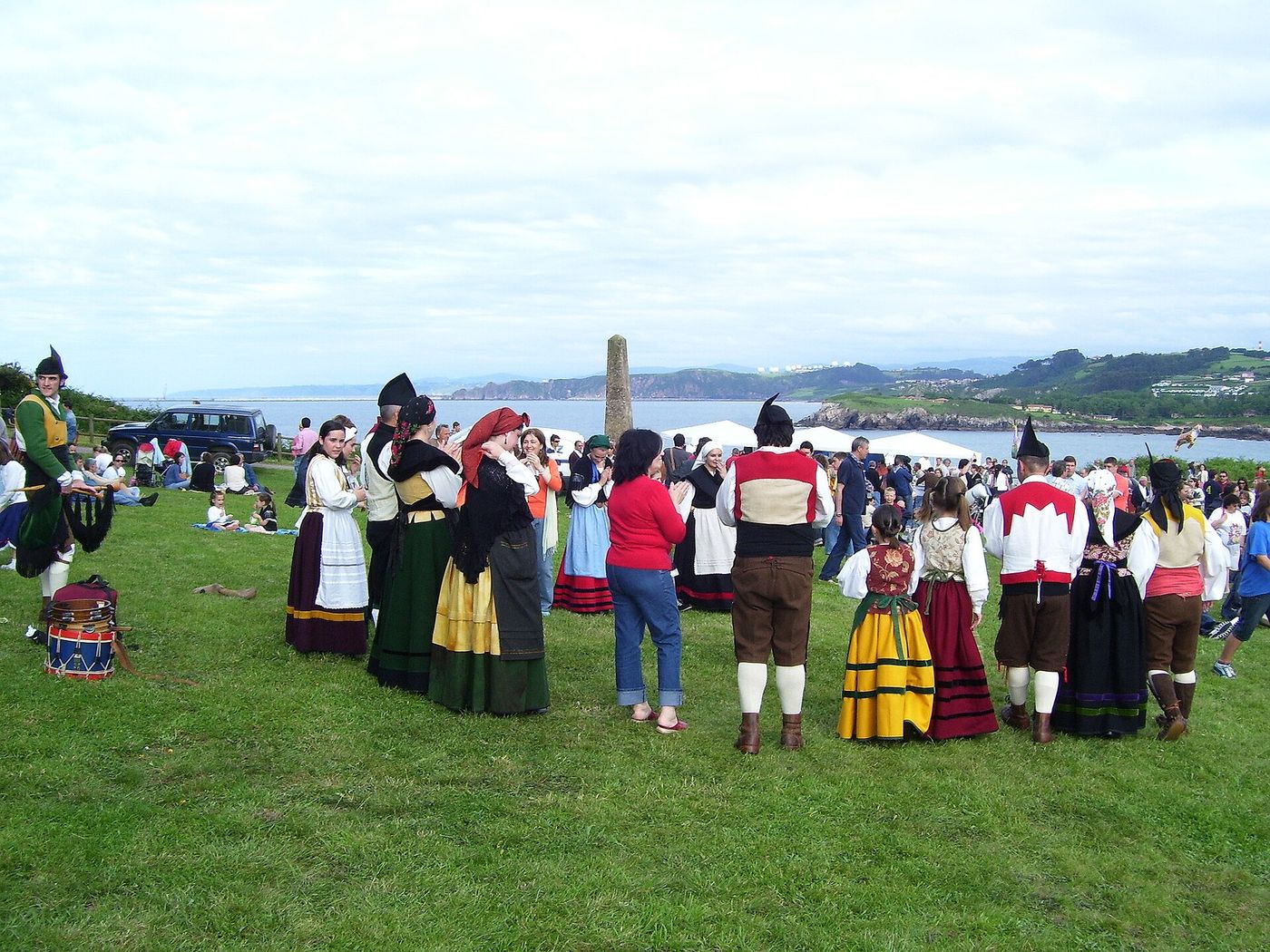
The mountain villages of Asturias and Cantabria sent their sons to the shops and sugar mills of Cuba and Mexico; the successful came home as indianos and built palm-flanked mansions beside the family cottage, many now marked on village heritage trails. The corridor is so specific that some Mexican and Cuban surnames can be walked back to a single concejo. The villages themselves still keep their patron-saint fiestas, their cider festivals and their livestock fairs.
The Basques: to the pampas and the American West
Basque villages on both sides of the Pyrenees sent younger sons to Argentina, Chile and Uruguay from the mid-1800s, and later to the sheep ranges of Idaho, Nevada and California, where Basque boarding houses anchored whole towns. There are far more people of Basque descent in the Americas than in the Basque Country; Aguirre, Echeverria and Ibarra on a Latin American tree point to a named farmhouse, because Basque surnames are house names. The village fiesta, pelota court and all, is still the centre of the year.
The Canaries: to Venezuela, Cuba and Louisiana
Canary Islanders emigrated for three centuries: colonial-era families founded San Antonio in Texas and the Islenos parishes of Louisiana, where a Canarian Spanish dialect survived into living memory, and the twentieth-century wave went so heavily to Venezuela that the islands call it the eighth island. Canarian village culture is festival culture: romerias with ox carts, patron-saint fiestas, and the flower carpets of La Orotava laid fresh each Corpus Christi.
What is waiting in the village
Spain keeps its village calendar with a seriousness few countries match. The fiesta patronal is the village's own days of processions, music and fireworks; the romeria walks the whole community to a country shrine and back with picnics and song; harvest brings the vendimia in wine country and the magosto chestnut fires in the north-west. The fiesta your emigrant ancestors would have known is, in most villages, still on the same saint's day, run by the same confraternities, a century and a half later.
Tracing your actual ancestor
Spanish civil registration begins in 1871 and parish registers reach centuries further back, held by diocesan archives and increasingly digitised region by region; Galicia's archives and emigration museums are particularly strong because the parish societies kept records at both ends. For arrivals, the CEMLA database indexes millions of Buenos Aires landings, Cuba's and Mexico's archives cover theirs, and passenger lists name the home municipio more often than not. Once you have the parish, you have the fiesta.
When Villagly Spain is live, every fiesta here will link to dates, the organiser's site and places to stay nearby. Stand where your family stood.