







German roots: the villages your family left
More Americans trace their ancestry to Germany than to anywhere else, over forty million of them, and the leaving was done from villages: wine towns on the Rhine and Moselle, farm hamlets in the Hunsrueck hills, Swabian and Franconian market villages, fishing places on the Baltic. The same villages sent congregations to southern Brazil and South Australia. German emigration was often communal, a pastor and his flock, a village and its neighbours, which means the place your family left is usually findable, and it still holds its Kirchweih, its Weinfest, its Schuetzenfest every year.
The Palatines: to Pennsylvania
It began early. Germantown, Pennsylvania was founded in 1683, and through the eighteenth century thousands of families left the Palatinate, the wine country west of the Rhine, for Penn's colony. Pennsylvania Dutch is not Dutch at all; it is Deutsch, the Palatine village dialect, still spoken by Amish and Mennonite communities whose ancestors left villages around Kaiserslautern and the Weinstrasse three centuries ago. The mass wave followed between 1840 and the 1890s, five million strong, from every German state to the American Midwest: the farm belt from Ohio to the Dakotas is German village culture writ across a continent.
Names that came this way: Mueller, Schmidt, Meyer, Wagner, Hoffmann, and every Miller and Smith that anglicised itself at the dockside.
The Hunsrueck: to southern Brazil
From the 1820s, poor farming villages in the Hunsrueck hills between the Moselle and the Rhine sent families to Rio Grande do Sul in Brazil's far south. Their descendants number in the millions, and their dialect, Hunsrik, is now a recognised language of Brazil, closer to what those villages spoke in 1824 than modern German is. Blumenau in neighbouring Santa Catarina throws the largest Oktoberfest in the Americas. If your Brazilian family has a German name, the odds are good the trail leads to a village within a day's walk of the Moselle.
The Silesians: to the Barossa
In the 1830s and 1840s, Lutheran congregations from Silesian villages emigrated together to South Australia rather than accept a state-imposed church union, and they planted the Barossa Valley: vines, hymns, and village names like Bethanien and Langmeil. Australia's oldest wine families are German village families. One honest note for this corridor and several others: borders have moved. Silesia is in Poland today, as are the villages of Pomerania and East Prussia that fed later waves, so tracing this line means looking in modern Poland with German-era place names in hand. The village is still there; its name on the road sign has changed.
What is waiting in the village
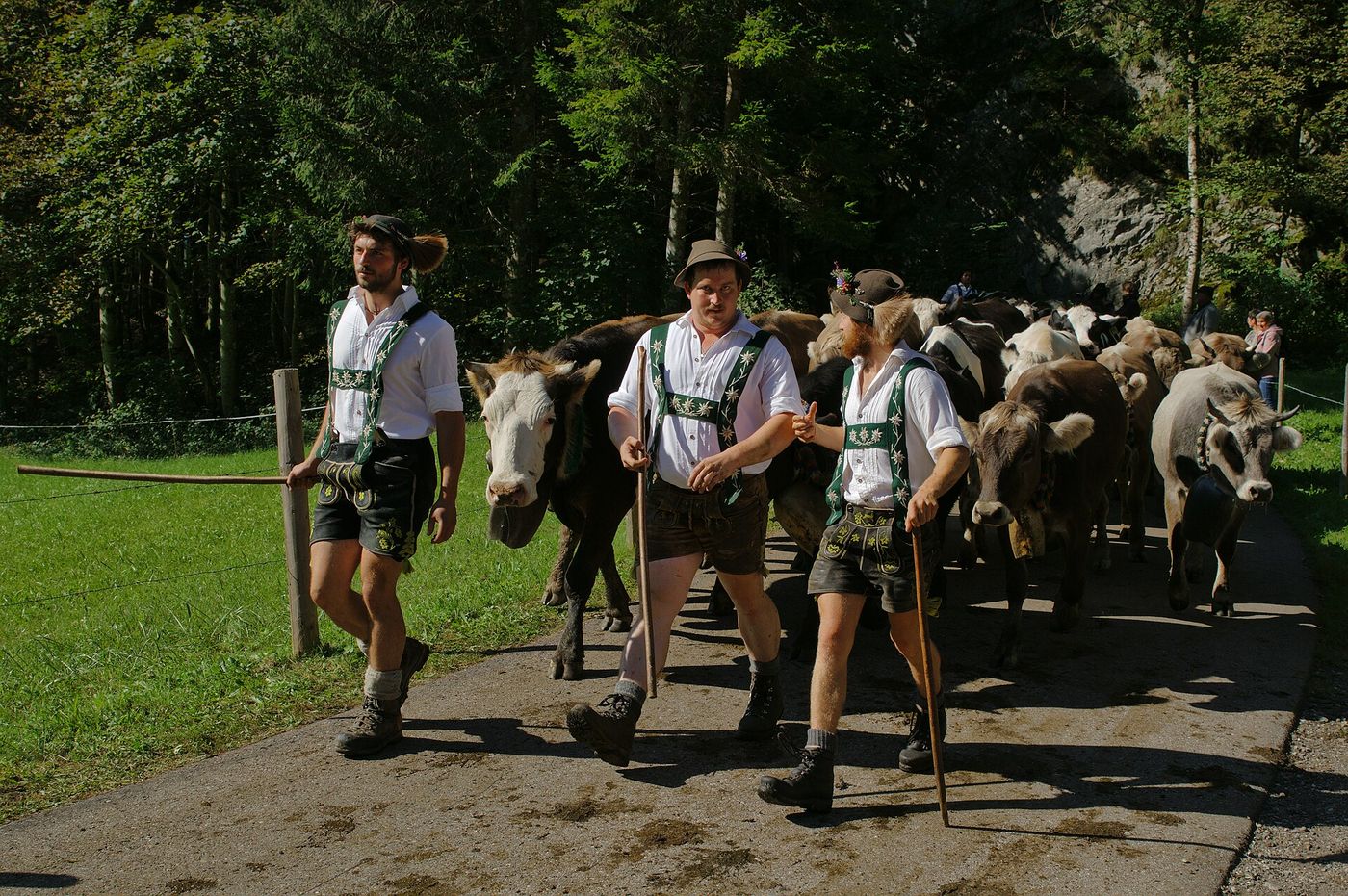
Rural Germany keeps its calendar. The Kirchweih or Kerwe, the anniversary of the village church, is the village's own annual festival, days of music, dancing and beer that emigrants carried to Cincinnati and Milwaukee. Wine villages on the Moselle, Rhine and in Baden hold Weinfeste through late summer; the Schuetzenfest, the marksmen's festival, still crowns its king in hundreds of northern villages; Alpine villages bring the cattle down from the mountains in flower-crowned Almabtrieb processions each autumn; and the Christmas market began as, and in a thousand villages remains, a village square affair.
Tracing your actual ancestor
The single best German source is the Hamburg passenger lists, which record almost every emigrant who sailed from Hamburg between 1850 and 1934, usually with their home village named; they are held by the Hamburg state archive and digitised on the major genealogy sites. Bremen's lists were mostly destroyed, so for Bremen sailings work backwards from the arrival records at Ellis Island and Castle Garden. Then it is the church books, the Kirchenbuecher: Protestant registers are digitised at Archion, Catholic ones free at Matricula, and they reach back to the sixteen hundreds, village by village, in the same parishes whose Kirchweih is still on the calendar.
When Villagly Germany is live, every festival here will link to dates, the organiser's site and places to stay nearby. Stand where your family stood.